
Tour planning made easy





Bike tours in Ischgl, Galtür, Kappl and See
Whether it’s down in the valley or up in the mountains: In Ischgl, Galtür, Kappl and See, you can find plenty of laid-back and challenging trails that are only waiting to be explored by you. In every route description, you can find information on the respective skill level, making your tour planning a lot easier.
Our tip: If you don’t own a mountain bike or would like to try an e-bike, you can rent a bike at one of the many bike shops on site. To join a guided bike tour, contact one of the experienced local bike guides.
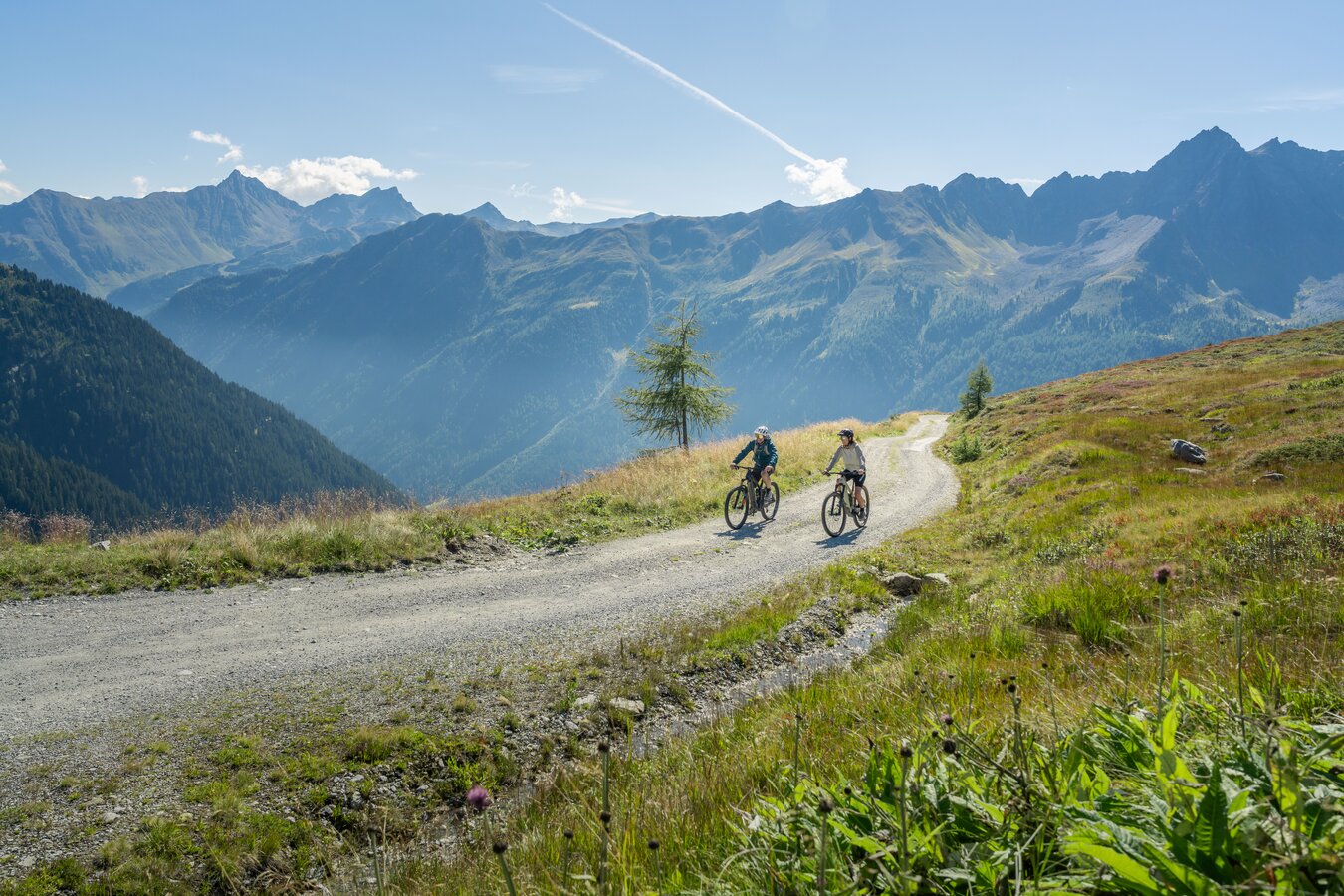
A guide to cycling tours in the Paznaun at a glance
- over 100 tours
- 4 places: Ischgl, Galtür, Kappl, See
- very easy to difficult
- Silvretta Bike Arena Ischgl/Samnaun
- Silva Trails Galtür
- Filter by location, difficulty, distance, elevation gain, duration
Important notes and tips
- Only fit in the mountains and not just "fit through the mountains".
- No mountain bike tour without careful tour planning.
- Take the right equipment for the planned tour and nothing unnecessary.
- Obtain information about the tour and the weather conditions.
- Take a ten-minute break every two hours.
- Drink and eat plenty during the tour.
- Never leave the marked trail!
- Abort the tour in good time in the event of danger or deteriorating weather conditions.
- Emergency equipment (first aid kit, bivouac sack, torch, mobile phone) belongs in every rucksack.
- In an emergency, stay calm and call the mountain rescue service (Alpine emergency number 140).
- Secure injured persons from falling rocks, falls, avalanches, etc.
- First aid (breathing, circulation, haemostasis, splinting, etc.)
- Protect the injured person from the weather (wind, rain, sun, etc.)
- Never leave the injured person alone. Constant encouragement and support are essential for survival
Alpine distress signal: Repeat a visual or acoustic signal at regular intervals six times a minute - followed by a one-minute pause - until a response is detected.
If it is not possible to raise the alarm for help from the accident site: the signaller descends to fetch help - but never leave the injured person alone! If possible, do not descend alone.
Provide the reporter with the following data in writing: Exact location of the accident, type of injury, number of injured and uninjured group members. Leave unused warm clothing, rain protection and food with the injured person.
Alpine pastures are not only popular destinations for hikers and nature lovers, but also a habitat for grazing animals and a workplace for farmers. To ensure a safe and respectful coexistence between people and animals, it is important to behave responsibly when out and about on the mountain.
Always keep a safe distance from grazing animals and avoid direct contact. Do not feed or stroke the animals and stay on marked paths whenever possible. If you encounter livestock on your route, remain calm, keep your distance and give the animals enough space. If they show signs of agitation, leave the pasture area calmly and promptly.
If you are hiking with a dog, always keep it on a short lead in areas with grazing livestock. Should an animal approach aggressively, release your dog from the lead so it can get out of the way. Please also make sure to use gates and fences correctly and close them again after passing through.
By showing consideration for nature, animals and the people who work on the alpine pastures, you help to ensure a safe and enjoyable mountain experience for everyone.
Find more information and the 10 rules of conduct for dealing with grazing livestock on the Safe Alps website: www.sichere-almen.at.
Enjoy the marvellous variety of plants in our alpine nature, but please adhere strictly to the legal regulations on the protection of native flora. It is also your responsibility to ensure that no plant species is wiped out and lost for future generations.
| Under protection: | ||||
 |
 |
 |
 |
 |
| Snow rose | Fire lily | Edelweiss | Cochineal | Türkenbund |
 |
 |
 |
 |
|
| Innsbruck pasque flower | Spring pasque flower | Blue gentian | Long-tubed primrose |
|
Also protected are:
Yellow and black rue, blue and yellow marsh iris, dwarf alpine rose, stemless and glossy-leaved primrose, Baldo anemone, dragon's head, true speik and all alpine cushion and rosette plants.
A maximum of five pieces may be picked from:
lily of the valley, large snowdrops or spring knot flowers, all columbine species, rock roses, platenigl, dwarf primrose and flour primrose, blue speick, cyclamen or cyclamen, white and yellow alpine anemone and narcissus anemone, all long-stemmed gentians, large-flowered and yellow foxglove.
At most, you may pick a hand bouquet of:
stonecrop, spring cowslip, centaury, short-stemmed, blue-flowering gentian and alpine aster.
Provided that no damage is caused to the tree by cutting off branches, it is permitted to take a hand bouquet of Swiss stone pine branches.